As renewable energy sources gain momentum, questions arise about their reliability. "What happens to solar curtain walls during a power grid failure?" This inquiry reflects the growing concern over energy resilience in the face of environmental challenges. Solar curtain walls combine aesthetics with functionality, yet their performance during grid outages needs scrutiny.
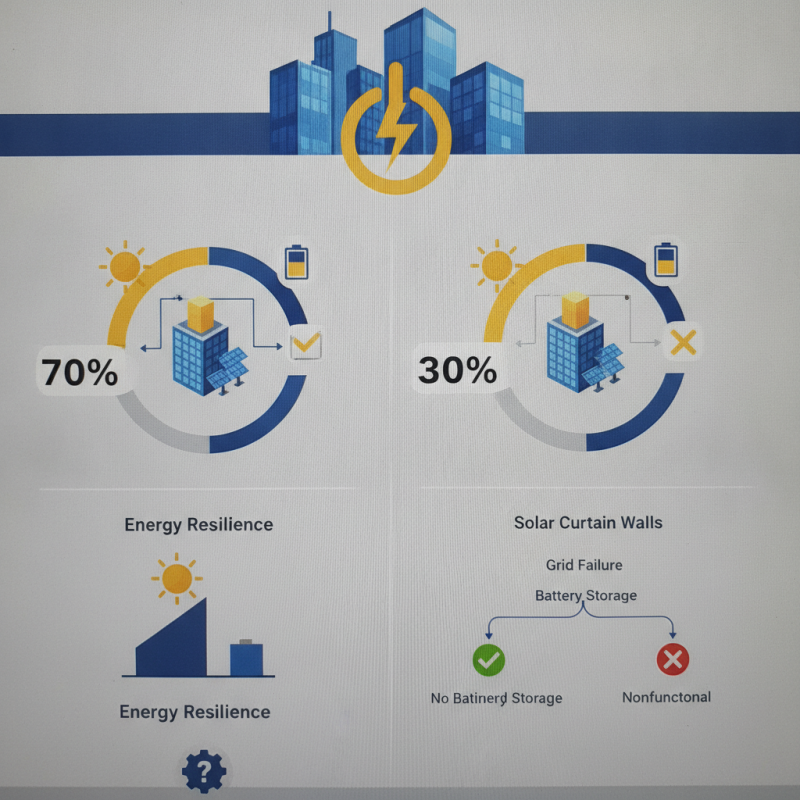
Industry reports indicate that over 70% of buildings are integrating solar technologies. However, many lack a comprehensive understanding of their limitations. When the power grid fails, solar energy systems may not supply electricity. If battery storage is not in place, solar curtain walls could become nonfunctional. A study by the National Renewable Energy Laboratory highlights that 30% of solar installations are not equipped with energy storage solutions. This is critical, especially for urban structures relying heavily on these systems.
The transition to solar curtain walls should include considerations for emergencies. It is essential to ask, can these structures remain effective during outages? Current designs may not address this challenge adequately. Stakeholders must reflect on integrating backup systems to enhance energy security. The effectiveness of solar curtain walls isn't just about aesthetics; it needs a robust approach for reliability in unforeseen circumstances.
Impacts of Power Grid Failure on Solar Curtain Wall Functionality
In a power grid failure, the functionality of solar curtain walls is significantly impacted. These systems rely on continuous energy supply to operate effectively. When the grid goes down, the ability to harness solar energy may also diminish. Data from the Solar Energy Industries Association indicates that without sufficient energy storage, efficiency can drop by up to 30%. This decline emphasizes the importance of robust backup systems.
Solar curtain walls primarily convert sunlight into usable energy. However, during grid outages, the solar inverter often cannot operate. Many inverters require grid connection for safety protocols. As a result, power generation ceases, leaving buildings reliant on these systems vulnerable. The Intergovernmental Panel on Climate Change has noted that energy resilience can be improved through local storage solutions, yet many installations remain unprepared.
Moreover, there is the risk of over-reliance on solar systems alone. If a building depends solely on solar curtain walls, it faces longer downtimes during grid failures. Studies show that hybrid systems integrating traditional energy sources can enhance resilience. Addressing potential weaknesses in solar curtain wall designs is crucial in ensuring uninterrupted energy supply during crises.
Architecture of Solar Curtain Walls: Mechanical and Electrical Dependencies
Solar curtain walls are an innovative architecture solution. They integrate photovoltaic technology for energy generation. However, their reliance on the power grid raises concerns during outages. These structures not only harness sunlight but also depend on mechanical and electrical systems.
When the power grid fails, solar curtain walls must function independently. This autonomy involves batteries and inverters. If these systems are insufficient, issues arise. Power outages can disrupt energy flow, leading to reduced efficiency. The connection between electrical and mechanical components is crucial. Problems in one system may cascade, affecting overall performance.
Tip: Regular maintenance of solar curtain wall systems is essential. Check batteries and inverters periodically. This ensures optimal functionality during emergencies.
Furthermore, there are inherent challenges. The design must balance aesthetics and functionality. Architects should consider potential mechanical failures. These structures must withstand weather changes and damage. The failure of one element could compromise the entire system. It's vital to address these risks early in the design phase.
Tip: Think about integrating backup systems. Redundant power sources can enhance reliability. This consideration can ensure continuous operation when the main grid is down.
What Happens to Solar Curtain Walls if Power Grid Fails?
| Aspect |
Description |
| Power Dependency |
Solar curtain walls depend on solar panels for energy production, which may not be sufficient if the grid fails. |
| Battery Storage |
Integrating battery systems can provide backup power during grid failures, ensuring functionality. |
| Mechanical Components |
Mechanical systems such as actuators for shading may rely on external power sources. |
| Emergency Protocols |
Buildings should have protocols to manage and switch to backup systems securely during power outages. |
| Energy Efficiency |
High energy efficiency of curtain walls can mitigate the effects of grid failure. |
| Load Management |
Smart load management systems can prioritize essential functions during a power failure. |
| Maintenance Considerations |
Regular maintenance of solar systems and backup components is crucial to ensure readiness in emergencies. |
Energy Storage Solutions for Solar Curtain Walls During Grid Outages
Solar curtain walls are innovative structures that harness solar energy to enhance building efficiency. When the power grid fails, these systems face unique challenges. Energy storage solutions play a crucial role in maintaining functionality. Without adequate storage, the benefits of solar energy diminish during outages.
Batteries are a common energy storage option for solar curtain walls. They store excess energy generated during sunny days. This stored energy can then supply power when the grid is down. However, battery technology has its limits. Lifespan and capacity can vary significantly, affecting performance. Regular maintenance is essential to ensure reliability.
Other storage technologies exist as well. Thermal storage, such as heated water tanks, can be an alternative. It uses excess energy to heat water for later use. But integrating thermal systems can be complex. Decisions must be made about space and compatibility. Exploring these options requires thoughtful planning. Each solution has pros and cons that must be weighed.
Case Studies: Failures in Solar Curtain Wall Systems Due to Power Loss
Solar curtain walls are innovative systems
that integrate solar energy generation into building facades. However, their reliance on the power grid raises concerns during outages. In such situations,
the solar curtain walls could face operational challenges. Some systems might not function optimally
without grid support, leading to energy loss.
Case studies reveal tangible failures. For example, a building equipped with a solar curtain wall
experienced reduced efficiency when the grid went down. This incident highlighted the vulnerability
of solar setups lacking adequate energy storage. In some cases, these walls continued collecting sunlight
but could not convert it without grid connection.
Another scenario saw a facility unable to power essential systems due to grid failure. The solar curtain
walls were designed for energy generation but lacked backup solutions. These instances suggest a need
for better planning and redundancy. The focus should be on improving reliability
and addressing these failures in future designs, ensuring solar curtain walls can provide uninterrupted
service even in emergencies.
Future Trends in Resilient Solar Curtain Wall Design Against Grid Failures
The resilience of solar curtain walls in a power grid failure scenario is increasingly vital. Studies show that building-integrated photovoltaics (BIPV) can produce over over 500 GWh of renewable energy annually per square mile. However, relying solely on the grid limits their full potential, especially during outages.
Advancements in resilient design are crucial. For instance, incorporating energy storage can enhance functionality. According to a report by the U.S. Department of Energy, systems with energy storage experience 40% fewer disruptions compared to conventional designs. This integration enables buildings to remain operational during grid failures. Incorporating materials that withstand extreme weather also leads to more durable solar installations.
Yet, challenges remain. Not all solar curtain walls are designed for autonomy. Many still depend on grid connectivity. This reliance can be problematic, leading to critical failures during outages. Designers must consider these factors. The industry needs more research on balancing cost and resilience in solar technologies. Adapting to these demands is necessary for future developments in sustainable architecture.
FAQS
: Their functionality is significantly impaired, as they depend on continuous energy supply to operate effectively.
Without sufficient energy storage, efficiency can drop by up to 30% during outages.
Many inverters require a grid connection for safety, causing power generation to cease when the grid fails.
Local energy storage solutions can enhance energy resilience, yet many installations remain unprepared.
Over-reliance can lead to extended downtimes during grid failures, leaving buildings vulnerable.
Routine checks on batteries and inverters help ensure optimal performance during emergencies.
They must balance aesthetics with functionality and address potential mechanical failures early in the design phase.
Integrating backup systems can provide redundancy and ensure continuous operation in case of grid failure.
Some systems experience operational challenges and energy loss without grid support, stressing the need for improved planning.
Focus on reliability and addressing vulnerabilities in future designs is crucial for uninterrupted service during emergencies.
Conclusion
The article "What Happens to Solar Curtain Walls if Power Grid Fails?" explores the critical relationship between power grid reliability and the functionality of solar curtain walls. When the power grid fails, solar curtain walls may experience significant operational disruptions due to their reliance on both mechanical and electrical systems. This dependence raises concerns about their performance during grid outages, highlighting the need for efficient energy storage solutions to maintain functionality and provide continuity of service.
Additionally, the article reviews case studies revealing failures in existing solar curtain wall systems due to power loss, emphasizing the importance of designing resilient systems that can withstand such challenges. As the demand for sustainable architecture grows, future trends will likely focus on enhancing the design of solar curtain walls to better resist power grid failures, ensuring they remain an effective component of modern energy-efficient buildings.

 Sypower Solar