When considering solar installations, one key question arises: How to choose the right adhesive for peel-and-stick solar? This choice significantly impacts the system's efficiency and longevity. Expert Mark Thompson, a leading authority in solar technology, notes, "The right adhesive can make or break your solar project." His insights highlight the importance of selecting an appropriate adhesive.
Adhesives vary widely in formulation and performance. Some are designed for specific surfaces, while others excel in particular weather conditions. Understanding these differences is crucial. Inadequate adhesive can lead to system failures or deter energy production. It's essential to match the adhesive properties with the project requirements.
Many users overlook potential issues. Some adhesives may not bond properly over time, affecting efficiency. Keeping this in mind is vital for long-term success. The process involves careful research and consideration, leading to better results. In the solar sector, making informed adhesive choices is more than a technical step; it's a commitment to sustainable energy future.
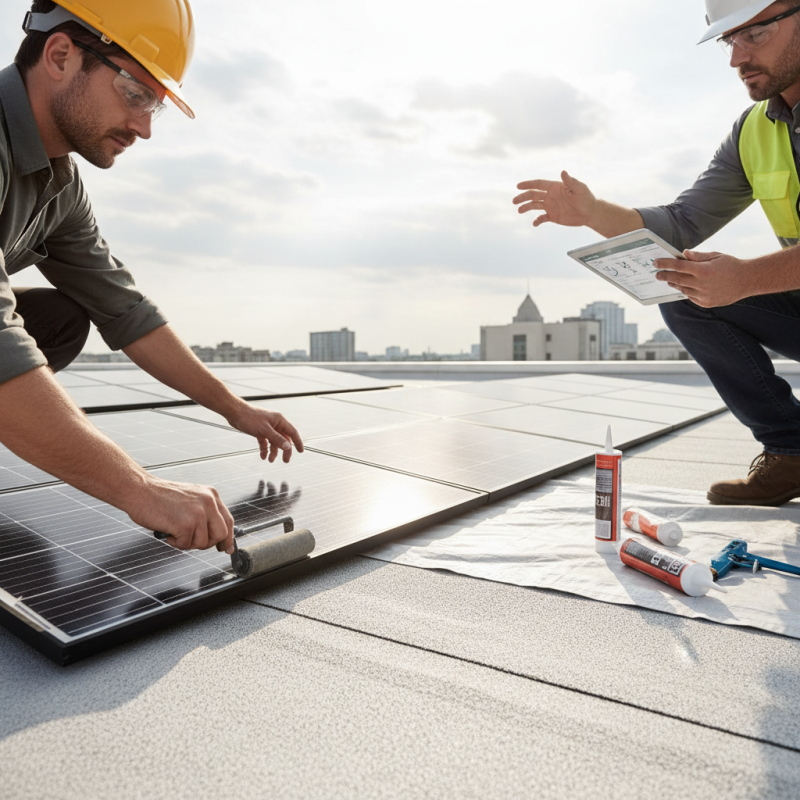
Peel and stick solar technology is a modern innovation in renewable energy solutions. It allows for easy installation on various surfaces. Many people are drawn to its convenience and efficiency. This type of solar panel uses a self-adhesive backing, making it possible to install without professional help. Understanding how this technology works is crucial for making informed decisions.
The adhesive used in peel and stick solar panels plays a vital role. It ensures that the panels stay in place and function optimally. The bond needs to withstand different weather conditions. You may wonder about the durability of these adhesives. Over time, exposure to elements can affect performance. It’s important to choose an adhesive designed for outdoor use.
Installation surfaces also impact effectiveness. Smooth, clean surfaces often yield the best results. Sun exposure and temperature can alter adhesive performance as well. Some users find that their adhesive doesn’t hold up as expected. Reflecting on these challenges is essential. Proper installation and the right adhesive choice can enhance longevity. Experimenting with different adhesives may lead to better results.
When choosing adhesives for peel and stick solar applications, several factors come into play. The adhesive must withstand outdoor conditions, including UV exposure and temperature fluctuations. A strong bond is essential to prevent lifting and damage from wind or rain.
Additionally, consider the surface material where the adhesive will be applied. Surfaces can vary widely, influencing adhesion quality. For example, rough surfaces may require a different type of adhesive compared to smooth ones. Evaluating compatibility with materials is critical in ensuring longevity.
Another point to consider is curing time. Some adhesives set quickly, while others may require more patience. It's easy to overlook this factor, but it can impact installation efficiency. In certain situations, a slow-setting adhesive allows for adjustments, promoting precise placement of solar panels. Making informed choices is vital for a successful installation.
| Factor | Description | Importance Level | Recommended Adhesive Type |
|---|---|---|---|
| Temperature Resistance | The adhesive should withstand extreme temperatures, both hot and cold. | High | Silicone Adhesives |
| UV Resistance | Ability to resist degradation under UV exposure is crucial. | High | Polyurethane Adhesives |
| Moisture Resistance | Important for outdoor use where exposure to water is possible. | Medium | Acrylic Adhesives |
| Bonding Strength | Strong bonding properties to ensure durability. | High | Epoxy Adhesives |
| Application Method | Ease of application can impact project efficiency. | Medium | Self-Adhesive Films |
When choosing adhesives for peel and stick solar installations, it's essential to consider various types. Different adhesives offer unique benefits and challenges. For instance, some are water-resistant, while others excel in high-temperature conditions. Understanding the project requirements helps in selecting the right adhesive type.
Acrylic-based adhesives are popular due to their strong bonding capabilities. They work well in diverse weather conditions. On the other hand, rubber-based adhesives offer flexibility and are easy to apply. However, they may not perform well in extreme temperatures. Both types have pros and cons that require careful evaluation.
The surface material also influences adhesive selection. Some adhesives bond better with metal surfaces, while others are ideal for plastic or wood. Testing a small area before full application can prevent future issues. This step can ensure compatibility and longevity of the installation. Making an informed choice is crucial for a successful peel and stick solar project.
When selecting an adhesive for peel and stick solar applications, environmental conditions play a crucial role. Research from the Adhesive and Sealant Council indicates that temperature variations greatly affect adhesive performance. For instance, adhesives may lose their bond strength in extreme heat or cold. Testing in environments ranging from 0°F to 120°F revealed that many adhesives struggle to maintain adhesion under such conditions. This inconsistency can lead to potential failures in solar panel placements.
Moisture also influences adhesive durability. A report by the American Society for Testing and Materials highlights that adhesives can weaken with prolonged exposure to humidity. In coastal areas, where moisture levels are consistently high, a standard adhesive might not hold up over time. It's essential to consider the local environmental challenges when choosing an adhesive, as making an uninformed decision could result in costly repairs.
Furthermore, UV exposure is another factor to consider. Adhesives that are not optimized for UV resistance can degrade quickly when exposed to sunlight. Studies show that certain adhesives experience a significant reduction in bond strength after just a few months of UV exposure. Understanding these environmental influences is vital for ensuring the longevity of peel and stick solar installations.
When installing peel and stick solar panels, applying the right adhesive is crucial. Ensure you prepare the surface adequately. Clean it thoroughly to remove dirt and debris. This simple step can significantly enhance the adhesive bond. Use a primer if necessary; it helps increase adhesion for long-lasting results.
It’s important to follow proper application techniques. Begin by applying the adhesive evenly. Uneven distribution can lead to weak spots, which may fail over time. Press the solar panel firmly into place after applying the adhesive. Check for air bubbles, as they can compromise the bond. If bubbles appear, gently lift and reposition the panel.
Consider environmental conditions during application. High humidity or extreme temperatures can affect adhesive performance. It’s worth noting that some adhesives may require specific curing times. Rushing this process can lead to failure. Always read the instructions carefully to ensure the best outcomes for your solar panel installation.
This bar chart illustrates the bond strength in psi of various adhesive types suitable for peel and stick solar panel applications. The data shows that epoxy offers the highest bond strength, while hot glue has the lowest, providing a visual reference for selecting the best adhesive for optimal performance.
: Consider outdoor conditions like UV exposure and temperature fluctuations. A strong bond prevents lifting and damage.
Surface materials vary widely, influencing adhesion quality. Rough surfaces may need different adhesives than smooth ones.
Curing time affects installation efficiency. Slow-setting adhesives allow for adjustments during panel placement, which can be beneficial.
Temperature variations significantly affect adhesive performance. Extreme heat or cold can lead to bond strength loss.
Prolonged moisture exposure can weaken adhesives. In coastal areas, standard adhesives may fail due to high humidity.
UV exposure can degrade non-optimized adhesives. Some lose bond strength significantly after months in the sun.
No, not all adhesives perform well under extreme conditions. Testing is crucial for successful installations.
Yes, an uninformed adhesive choice can result in costly repairs over time due to failures in bond strength.
Understanding environmental influences and selecting the right adhesive are vital for ensuring long-lasting installations.
Yes, many adhesives do not maintain adhesion well in temperatures ranging from 0°F to 120°F. Adjustments might be essential.
When considering "How to choose the right adhesive for peel-and-stick solar?", it's essential to understand the fundamentals of peel and stick solar technology. The choice of adhesive significantly impacts the efficiency and longevity of solar installations. Factors such as environmental conditions, surface materials, and the specific application of the panels must be evaluated to ensure optimal adhesion.
Different types of adhesives, including pressure-sensitive and high-strength options, cater to various installation scenarios. Evaluating adhesive performance in different climates helps in determining reliability and durability. Furthermore, employing proper application techniques is crucial for achieving a robust bond between the adhesive and solar panels, ultimately enhancing energy production and system lifespan.

Sypower Solar