The trend toward lightweight solar modules is gaining attention in the renewable energy sector. These innovations could revolutionize energy efficiency and installation processes. But the question remains: "How much weight can a lightweight solar module save?"
Consider a traditional solar panel weighing about 40 pounds or more. A lightweight alternative can drop this weight significantly, potentially saving over 20 pounds per module. This reduction can ease the burden on rooftops and mounting systems. It allows for easier transportation and installation, making solar energy accessible to more people.
Saving weight also means improved structural integrity for various applications. In automotive and aerospace sectors, lighter modules can enhance performance. However, the challenge lies in maintaining durability and efficiency. Transitioning to lightweight modules might lead to unforeseen trade-offs in performance. Balancing weight reduction with reliability is crucial. We must examine both the advantages and potential drawbacks of using lightweight solar technology.
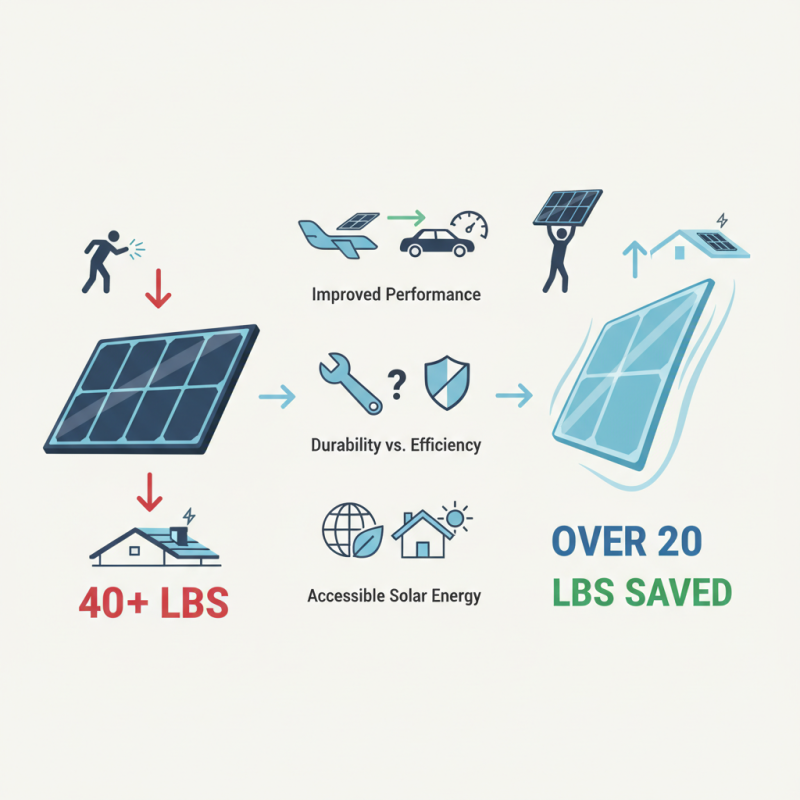
Lightweight solar modules offer remarkable benefits that enhance energy efficiency. Studies show that these modules can reduce installation costs by up to 20%. Their reduced weight simplifies the installation process, allowing for quicker, more efficient setups. Additionally, lightweight panels can be installed on structures with weight limitations, opening up new opportunities for solar deployment.
Moreover, lightweight solar modules have shown impressive performance in diverse environmental conditions. Research by the National Renewable Energy Laboratory indicates that they maintain efficiency even in challenging climates. This adaptability is crucial for maximizing energy output and enabling consistent performance.
However, not all lightweight modules perform similarly. Some may sacrifice durability for weight savings. It's essential for users to consider longevity alongside energy efficiency. The balance between these factors can significantly impact long-term savings and environmental benefits. Continuous research and innovation are key to developing products that prioritize both lightweight designs and robust performance.
Lightweight solar modules are changing the landscape of solar energy. They have become popular due to their efficiency and ease of installation. In this comparison, we will focus on the weight differences between traditional and lightweight solar modules.
Traditional solar panels can weigh anywhere from 40 to 50 pounds each. This significant weight requires sturdy mounting structures. Many roofs may struggle with this added load.
In contrast, lightweight solar modules weigh about 20 pounds. This reduction can ease installation and reduce structural concerns. Fewer reinforcements are necessary, making the process smoother.
However, it's essential to reflect on material choices. Lightweight materials may not always offer the same durability as traditional ones. This compromise could raise questions about long-term reliability. Additionally, performance in harsh weather conditions must be examined. Each choice has its pros and cons, and consumers should weigh them carefully.
Lightweight solar modules offer potential weight savings, but several factors influence their effectiveness. These modules use advanced materials to reduce weight while maintaining efficiency. Key aspects include the choice of materials, the module's design, and installation techniques.
When selecting lightweight solar modules, consider your specific application. Roof installations may benefit from reduced roof load. Ground-mounted systems might prioritize strength over weight. Effective planning helps maximize the advantages of lightweight options.
**Tip:** Always consult with a professional about local regulations and structural requirements. This ensures safety and compliance.
An additional factor involves the energy needed for production. While lightweight modules can save transport costs, their manufacturing process may differ. Evaluating the full lifecycle of the module is essential. Local conditions, like wind and snow loads, can also affect weight savings.
**Tip:** Engaging with experienced solar consultants can guide you through material choices. They help assess various factors unique to your project.
| Dimension | Standard Module Weight (kg) | Lightweight Module Weight (kg) | Weight Savings (kg) | Weight Savings (%) |
|---|---|---|---|---|
| Standard 60-cell | 18.0 | 12.5 | 5.5 | 30.6 |
| Standard 72-cell | 22.0 | 15.0 | 7.0 | 31.8 |
| Bifacial Module | 24.0 | 17.0 | 7.0 | 29.2 |
| Flexible Module | 10.0 | 5.0 | 5.0 | 50.0 |
The weight of solar modules plays a significant role in installation costs. Lighter solar panels reduce labor and structural requirements. This is especially important for rooftops and other challenging locations. Reduced weight means fewer support structures and less reinforcement is needed. This can lead to significant savings in both materials and installation time.
Moreover, lightweight modules are easier to transport and handle. This is beneficial during installation. Fewer workers are needed, which can lower labor costs. However, lightweight materials can sometimes compromise durability. There’s a balancing act between weight and strength that needs careful consideration. It's crucial to evaluate the long-term implications of lighter technologies.
On the financial side, the potential savings are considerable. Calculate how weight reduction affects overall project costs. A thorough analysis can reveal substantial reductions in both direct and indirect costs. This aspect of solar technology deserves more attention. Investing in lighter modules might be appealing, but the long-term reliability must also be factored in.
Lightweight solar modules are gaining traction in renewable energy discussions. Their unique design allows for reduced weight, making them easier to install and transport. This is a game changer for rooftops and other structures. They can be integrated into various surfaces, including vehicles and buildings. Their adaptability unlocks new possibilities.
Innovations in materials play a crucial role in this evolution. Researchers are exploring options like organic photovoltaics and advanced polymers. These developments aim to enhance efficiency while maintaining a lighter footprint. However, challenges remain. The durability of lightweight materials is under scrutiny. Will they survive harsh weather conditions? Long-term performance needs further evaluation.
Cost is another area requiring attention. While initial investments may be high, long-term savings can be significant. Comparatively speaking, the return on investment may reflect the ongoing advances in technology. Balancing cost-efficiency with reliability is essential for wider adoption. As this field evolves, it is vital to monitor industry trends and breakthroughs. Understanding both the potential and limitations ensures informed decisions for future energy solutions.
: These modules use advanced materials to decrease weight while maintaining energy efficiency.
The module design, materials used, and installation methods greatly influence how much weight can be saved.
Consider your specific application, such as roof load for installations or strength for ground-mounted systems.
Professionals can provide insights on local regulations and structural requirements to ensure safety and compliance.
The energy needed for production must be evaluated alongside potential transport cost savings to understand total lifecycle.
Innovations in materials, like organic photovoltaics, may enhance efficiency while reducing weight, but challenges exist.
The longevity of lightweight materials in harsh conditions is still under scrutiny and needs further evaluation.
Yes, despite higher initial costs, long-term savings can be substantial if technology continues to advance.
Balancing cost-efficiency and reliability is crucial for determining the return on investment in this evolving field.
Monitoring industry trends and understanding potential limitations helps in making informed choices for future energy solutions.
Lightweight solar modules offer significant advantages in energy efficiency by reducing the overall weight of solar installations. This reduction can lead to substantial savings in materials and installation costs, as it often allows for the use of lighter mounting systems and less structural reinforcement. The comparison between traditional and lightweight solar modules highlights the considerable weight savings achievable, which is a critical factor in optimizing solar energy systems.
The question, "How much weight can a lightweight solar module save?" depends on various factors, including the materials used, design innovations, and the specific applications they are intended for. As technology advances, future trends indicate that lightweight solar modules will continue to evolve, providing even greater efficiency and cost-effectiveness, thus enhancing their viability in a wide range of installation scenarios.

Sypower Solar