In the quest for sustainable energy solutions, the choice between CIGS and monocrystalline flexible panels has become pivotal. Both technologies offer unique advantages and challenges. As the demand for flexible solar panels grows, many wonder, "What is the difference between CIGS and Monocrystalline flexible panels?"
CIGS panels, known for their lightweight and adaptable nature, are made from copper, indium, gallium, and selenium. These panels can be integrated into various surfaces, making them popular for portable applications. However, their efficiency tends to be lower than that of monocrystalline panels. Conversely, monocrystalline panels boast higher efficiency rates but typically lose flexibility.
Understanding these differences is crucial for effective decision-making. A confluence of factors, such as cost, efficiency, and application, should guide potential users. Ultimately, the choice depends on individual needs and circumstances, which may require further reflection and research. Making the right choice can lead to significant energy savings and a sustainable future.
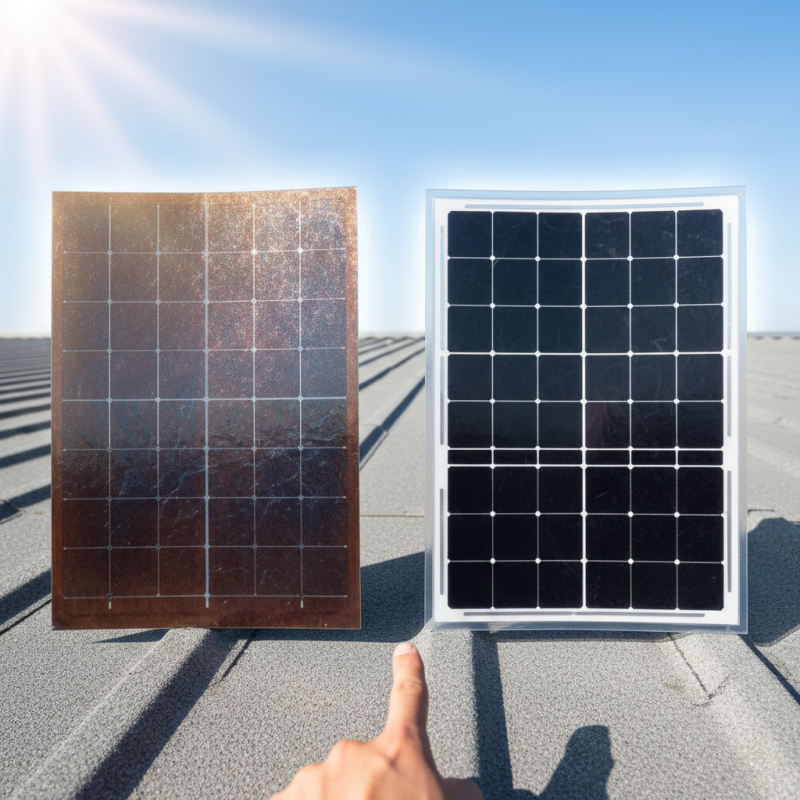
CIGS (Copper Indium Gallium Selenide) flexible panels offer unique advantages.
They are lightweight and can be integrated into various surfaces. This makes them ideal for unconventional spaces,
like curved rooftops and portable devices. The manufacturing process allows for reduced waste, making them an
eco-friendly option. Additionally, CIGS panels perform better in low-light conditions compared to traditional solar panels.
However, there are limitations. CIGS panels typically have lower efficiency rates.
This means they convert less sunlight into energy compared to monocrystalline options. Moreover, the longevity of CIGS can be a concern. They may degrade
faster under harsh weather conditions. Users must consider these factors when selecting solar solutions.
While CIGS panels provide flexibility, their efficiency and durability pose questions. Would the benefits outweigh the potential drawbacks for your specific needs?
Understanding both sides is crucial for informed decisions. Consumers should weigh their priorities—space, efficiency, and sustainability—before opting for flexible solar technologies.
Monocrystalline flexible panels offer significant advantages that make them a compelling choice for solar energy solutions. One key feature is their lightweight design, making them easy to transport and install. These panels can adapt to various surfaces, which is particularly useful for mobile applications. The high efficiency rate is another benefit. They convert more sunlight into electricity compared to other types. This feature is especially valuable in areas with limited roof space.
However, the production of monocrystalline panels can be resource-intensive. This raises concerns about sustainability and environmental impact. They require careful handling to avoid damage during installation. Users should be aware of this issue as it may affect overall efficiency. Understanding the environmental footprint is essential when considering solar options.
**Tips:** Consider the size and weight when choosing flexible panels. Ensure you have a suitable installation space. Always compare the efficiency ratings before making a decision. Look into the warranty period to assess reliability. Do thorough research to understand all aspects of your choice.
CIGS and monocrystalline panels have distinct performance metrics that can affect their efficiency in solar applications. CIGS, or Copper Indium Gallium Selenide, tends to perform better in low-light conditions. This makes it suitable for environments with less sunlight. Monocrystalline panels excel in direct sunlight and often have higher efficiency ratings. However, they may not perform as well in shaded conditions.
When evaluating efficiency, it’s crucial to consider temperature coefficient. Monocrystalline panels usually have a better temperature coefficient. This means they lose less efficiency in high heat. CIGS panels, while flexible and lightweight, may experience a drop in performance under extreme temperatures. The durability of these panels also differs. Monocrystalline panels generally offer a longer lifespan, but their rigidity can be a limitation in specific installations.
Another aspect is the installation process. CIGS panels can be easier to install in unconventional spaces due to their flexibility. However, this flexibility sometimes leads to questions about long-term reliability. In contrast, monocrystalline panels provide a stable installation but can be more complex to manage in tight areas. Each type has strengths and weaknesses, making the choice dependent on specific project needs.
When it comes to choosing between CIGS and monocrystalline flexible panels, several factors play a crucial role. Both options have unique advantages. CIGS panels are thinner and lighter, making installation easier in certain applications. These panels are also more adaptable to different surfaces, which is a significant benefit for residential buildings with unconventional layouts. However, their efficiency tends to be lower compared to monocrystalline panels, and this may raise concerns for some consumers.
On the other hand, monocrystalline panels generally offer higher energy efficiency and longer lifespans. They perform better under low light conditions. Yet, the rigid structure may limit their application in flexible setups. The initial investment for these panels is typically higher as well. Individuals often grapple with weighing long-term benefits against short-term costs. Understanding the specific energy needs and physical constraints of your building is essential. Seeking professional guidance can provide valuable insights during this decision-making process.
When considering flexible solar panels,
cost-effectiveness is crucial. CIGS (Copper Indium Gallium Selenide) panels
often present a lower initial investment than monocrystalline options. Market trends indicate that
demand for flexible solutions is surging due to their lightweight and versatile applications.
However, the efficiency levels of these panels can vary significantly.
Monocrystalline panels usually boast higher efficiency rates but come at a premium cost.
While some may argue that the extra expense is justified by longevity and output, others may find
themselves reflecting on the balance of price versus performance. This ongoing debate invites scrutiny—
how much can one afford to pay for the promise of lower energy bills?
Tips for consumers:
: They are lightweight, easy to transport, and high in efficiency. They adapt well to various surfaces.
CIGS tends to perform better in low-light, while monocrystalline excels in direct sunlight.
Their production is resource-intensive, raising sustainability and environmental impact issues. This is worth reflecting on.
They can be complex to install in tight areas, requiring careful handling during the process.
Look at size, weight, installation space, efficiency ratings, and warranty. Research thoroughly for informed choices.
Monocrystalline panels have longer lifespans but are more rigid. CIGS offers flexibility but may raise reliability concerns.
A better temperature coefficient means less efficiency loss in high heat, which is a strong point for monocrystalline panels.
While flexible, their installation may lead to questions about long-term reliability and performance.
Knowing your specific energy requirements helps in choosing the right type of solar panel for your space.
Monocrystalline usually requires a higher initial investment, prompting a trade-off assessment between short-term costs and long-term benefits.
The article "CIGS vs Monocrystalline Flexible Panels: Which Is Better?" delves into the distinct characteristics and advantages of CIGS (Copper Indium Gallium Selenide) and Monocrystalline flexible solar panels. It highlights that CIGS panels are known for their lightweight design and ability to perform well in low-light conditions, while Monocrystalline panels are celebrated for their high efficiency and space-saving benefits.
Furthermore, the article poses the question, "What is the difference between CIGS and Monocrystalline flexible panels?" and addresses aspects such as performance metrics, durability, and aesthetic versatility. It explores important factors that influence the choice between these two types of panels, including installation costs and market trends, ultimately guiding readers to make informed decisions based on their energy needs and budget considerations.

Sypower Solar