Walking on marine flexible solar panels can be a concern for many boat owners. These innovative solar solutions provide energy efficiency without adding significant weight. However, the real question arises: "Can I walk on marine flexible solar panels?" The answer requires careful consideration.
Marine flexible solar panels are designed to be lightweight and durable. They can withstand harsh marine conditions, but they are not always meant for foot traffic. The materials used can vary in strength. Some panels may support light foot traffic, while others might be more fragile.
It's essential to check the manufacturer's guidelines. Understanding the specific panel construction helps determine their weight-bearing capacity. Inevitably, there is a balance between functionality and potential risks. While it might be tempting to walk across them, caution is advised. The panels could sustain damage, leading to costly repairs. In conclusion, weigh the benefits and risks before stepping on these solar panels.
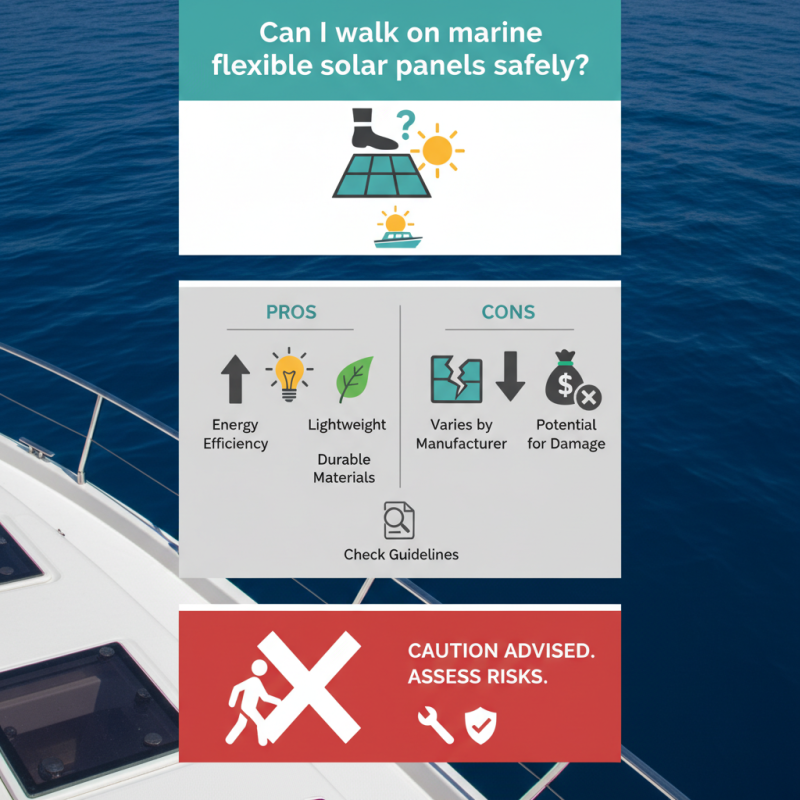
Marine flexible solar panels are designed to withstand harsh conditions. They are lightweight, durable, and can conform to various surfaces. Many boat owners opt for these panels due to their versatility. However, walking on these panels requires an understanding of their limitations and construction materials.
Safety features include their rugged surface and weather-resistant components. Yet, some panels may not be rated for foot traffic. Always check the specifications before stepping onto a panel. Different models have varying tolerances. A careful examination will help avoid potential damage.
It's also important to consider the installation method. Secure mounting can enhance stability. But if improperly installed, walking on the panels could lead to cracks or breaks. The delicate balance of safety and functionality must be maintained. It's wise to tread cautiously and prioritize the panel's integrity.
| Feature | Specification | Safety Rating |
|---|---|---|
| Material Used | ETFE (Ethylene Tetrafluoroethylene) | High Durability |
| Weight | 1.5 kg/m² | Lightweight |
| Flexibility | Up to 30 degrees curvature | Flexible |
| Water Resistance | IP68 Rated | Fully waterproof |
| Impact Resistance | High Impact Resistance | Safe for foot traffic |
| UV Resistance | UV Stabilized | Long-lasting |
| Warranty | 10 years | Reliable performance |
When considering the durability of flexible solar panels on boats, several critical factors come into play. One major aspect is the material used in construction. High-quality polymers resist abrasion and potential damage better than cheaper alternatives. Choosing panels designed specifically for marine use enhances longevity and performance in harsh conditions. UV exposure can also degrade panels, so selecting those with good UV resistance is essential.
Mechanical stresses from foot traffic pose another significant risk. While many flexible solar panels can withstand some weight, excessive pressure can lead to cracks or loss of functionality. Expanding and contracting with temperature changes can weaken these panels over time.
Tips: Always inspect your panels for signs of wear before deployment. Additionally, consider a protective layer, like a mat, when walking on them. Limit foot traffic to reduce strain. Regular maintenance checks help catch issues early, ensuring your panels remain effective longer. This careful approach balances maintaining access and protecting your investment.
Walking on marine flexible solar panels can pose risks if proper practices are not followed. The materials used in these panels are designed to be lightweight and flexible, which makes them vulnerable to damage. According to research from renewable energy specialists, nearly 30% of solar panel damage occurs from improper handling, including walking.
To walk on these panels safely, it’s crucial to distribute your weight evenly. Foot placement matters. Always step on the stronger areas of the panel where the structural elements are present. Experts recommend wearing shoes with soft soles to minimize pressure. A study indicates that even minor surface scratches can reduce efficiency by up to 10%.
Regular inspections are vital. Check for signs of wear or damage after walking on the panels. If you notice abnormal curves or discoloration, avoid walking on them until resolved. Awareness of the panel's condition prevents costly repairs and maintains optimal performance. Remember, flexibility comes with fragility.
Walking on marine flexible solar panels poses several potential risks. These panels, though designed for durability, may not withstand significant weight. Their lightweight nature makes them vulnerable to cracks. Damage can lead to reduced efficiency or even complete failure.
The surface of these panels may become slippery when wet, increasing the chance of slips and falls. Even minor scuffs can impact their performance. Regular maintenance is crucial, but identifying damage is difficult without experience. The flexibility of these panels also means they can bend under pressure, causing stress to internal components.
Understanding the materials and design used in flexible solar technology is essential. Not all panels are made to bear weight, and assuming otherwise can lead to costly repairs. It’s vital to approach with caution, prioritize safety, and consider alternatives for maintenance tasks. Investing time in proper handling methods will save you from potential accidents and losses.
This chart illustrates various safety assessment factors when considering walking on marine flexible solar panels. The data indicates potential risks such as the risk of damage (70%), weight limit concerns (50%), limited foot traffic (30%), weather resistance (80%), and the importance of installation quality (60%). Ensuring these factors are addressed is crucial for safe use.
Walking on marine flexible solar panels can raise concerns about durability and safety. To ensure their longevity, proper maintenance is essential. Regular cleaning is crucial. Use a soft brush or cloth to gently remove dirt and debris. Avoid abrasive cleaning solutions, as they may scratch the surface.
Another tip is to inspect the panels frequently. Look for any signs of wear or damage. If you notice cracks or tears, address them promptly. Repairing minor issues can prevent bigger problems later. Additionally, be cautious during installation and routine maintenance. Distribute your weight evenly to avoid putting too much pressure on any one spot.
Always check the manufacturer's guidelines for specific care instructions. Staying informed can help maintain the integrity of your solar panels. Seasonal weather changes can affect performance. Therefore, following these tips will contribute to the efficiency and life span of marine flexible solar panels.
: They are designed to withstand harsh marine conditions and are lightweight and durable.
Walking is possible, but one must understand their limitations and risks beforehand.
Always check the specifications for foot traffic ratings before stepping on the panel.
Material quality, UV resistance, mechanical stress, and temperature changes affect durability significantly.
Limit foot traffic and consider a protective layer, like a mat, to minimize wear.
Maintenance helps identify wear and damage early, ensuring panels remain effective.
It may crack or lose functionality, leading to costly repairs or complete failure.
Inspect your panels closely for signs of damage before deployment to prevent issues.
High-quality polymers are ideal as they resist abrasion and have better longevity.
These panels can expand and contract, which may weaken them over time if not monitored.
In addressing the question, "Can I walk on marine flexible solar panels?", it is essential to understand their design and safety features. Marine flexible solar panels are crafted to be lightweight and robust, allowing for some foot traffic; however, the extent to which they can bear weight varies depending on their composition and installation. Factors affecting their durability include exposure to harsh marine environments and maintenance practices.
To walk on these panels safely, adhering to best practices is crucial, such as avoiding sharp objects and distributing weight evenly. It is important to be aware of potential risks, including the possibility of damage or slipping, which can affect the panel's efficiency. Regular maintenance, like cleaning and inspecting for wear, ensures longevity and optimal performance of the flexible solar panels on boats. Ultimately, while walking on marine flexible solar panels is possible, caution and awareness of their limitations are vital for safe use.

Sypower Solar